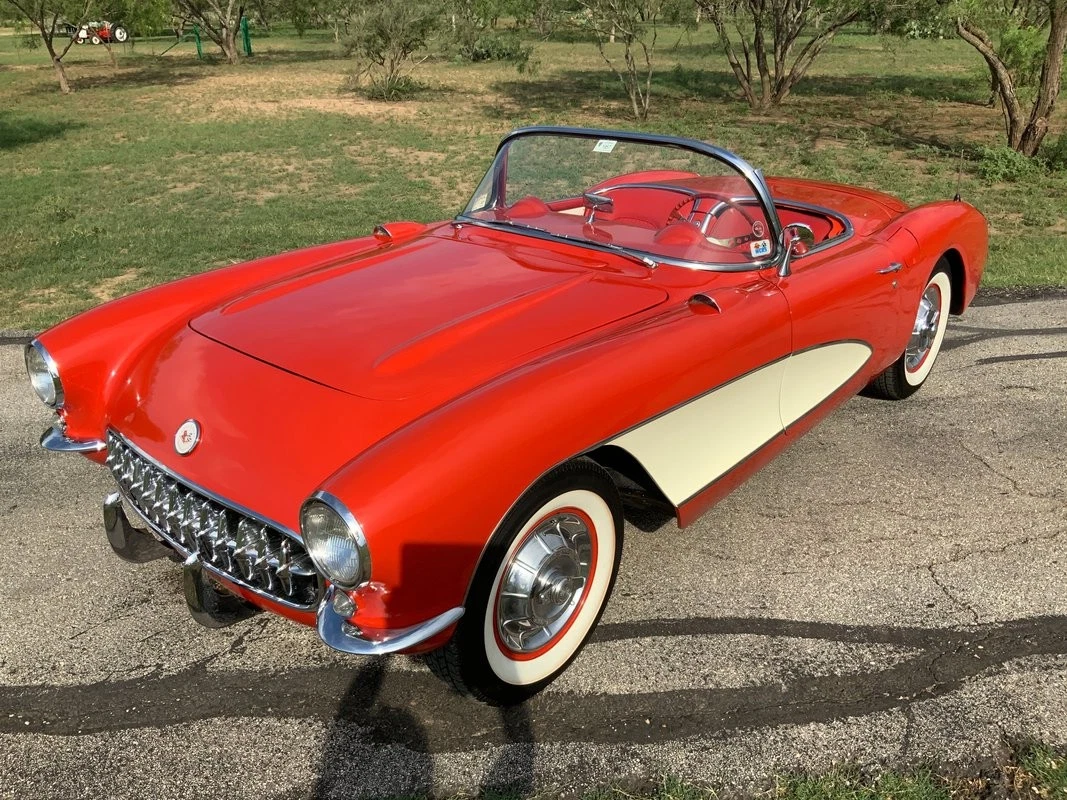
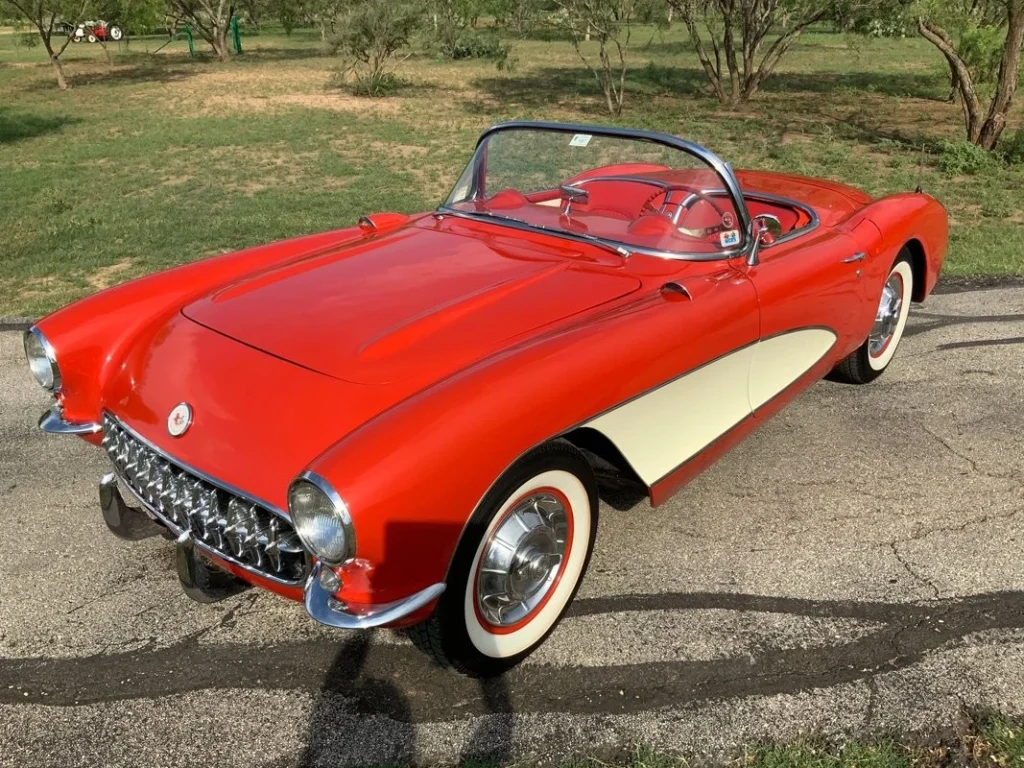
The fuel-injected 283 V8 of the ’57 Corvette hummed a steady, throaty rumble that seemed to harmonize with the rolling hills, its red paint gleaming against the lush green pastures. With the top down, the scent of wild clover and sun-warmed hay drifted through the cockpit, mixing with the subtle, nostalgic aroma of gasoline and oil. The narrow country road stretched ahead, bounded by weathered split-rail fences and sun-drenched dairy farms where Holstein cows casually paused their grazing to watch the passing chrome and fiberglass. Sunlight filtered through ancient oaks, creating a dappled pattern of light and shadow across the sweeping white-coved doors of the car as it navigated the gentle curves. Feeling the direct, mechanical connection of the massive steering wheel in hand, the ride was raw and uncompromised, making the transition from asphalt to a gravel drive feel like a step back into a simpler, louder era.
Some links on this website are eBay affiliate links.
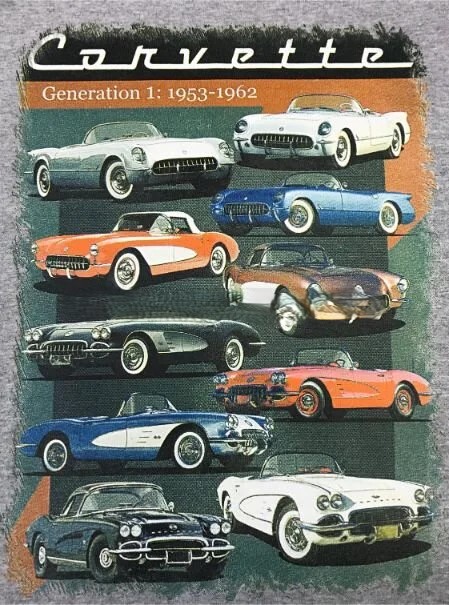
The C1 Corvette was produced for nine years, spanning from the 1953 to 1962 model years. As the first generation, it established the Corvette as a “solid axle” convertible, featuring a fiberglass body and evolving from a six-cylinder roadster to a high-performance V8 sports car by its final year.
Key C1 Corvette Era Highlights:
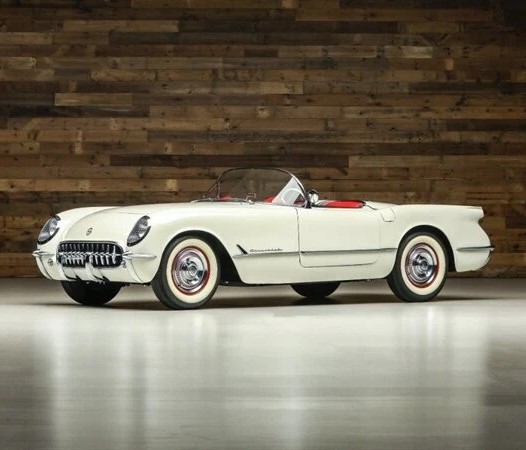
- 1953: Production began with only 300 units, all convertibles, featuring a “toothy” grille and straight-six “Blue Flame” engine.
- 1954: The 1954 Corvette, the second year of the C1 generation, featured a 150-155 horsepower “Blue Flame” inline-six engine with a two-speed Powerglide automatic transmission, produced in 3,640 units. It was originally priced around $2,774
- 1955: The 265 cu in V8 engine became available, saving the model from potential cancellation.
- 1956–1957: A new body style introduced side “coves” and roll-up windows, eliminating the side-curtain design.
- 1958: Introduced quad headlights, a longer front end, and a revised dashboard.
- 1959: The 1959 Corvette was the fourth model year of the first-generation (C1) car, with 9,670 units produced. It was refined from the 1958 model by removing the simulated hood louvers and rear chrome “suspenders,” creating a cleaner look. It was the last year in which fewer than 10,000 Corvettes were produced.
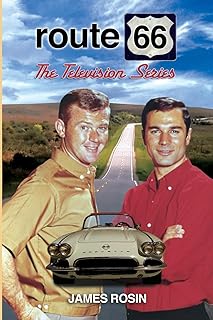
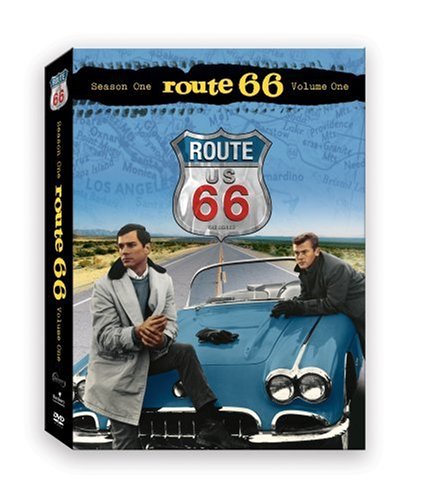
- 1960: The 1960 Chevrolet Corvette is a significant, late-model example of the first-generation (C1) Corvette, produced between 1953 and 1962. The 1960 model year saw production exceed 10,000 units for the first time, reaching a total of 10,261 cars. It is highly regarded for being the last to feature the iconic toothed grill and extensive chrome trim, and it gained pop-culture fame as the car featured in the television show Route 66.
- 1961: Final evolution featured the “duck tail” rear end with four round taillights, a design feature that lasted for decades.
- 1962: The last year for the solid-axle design, featuring a larger 327 cu in V8.
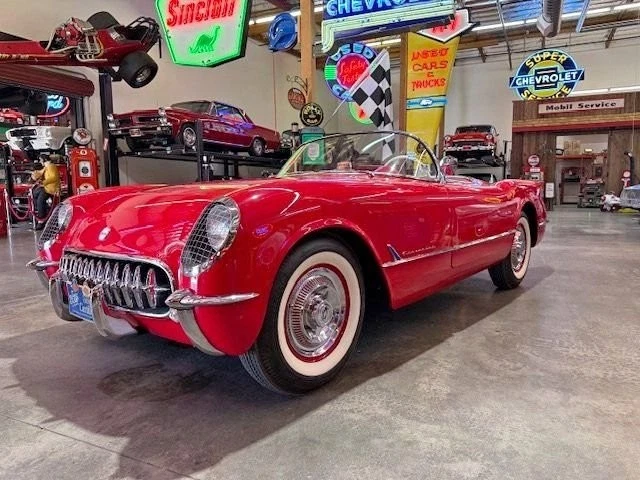
The late afternoon sun painted the sky in shades of amber as the 1954 Chevrolet Corvette, a “Sportsman Red” masterpiece, purred down the narrow gravel country road. Its fiberglass body, smooth and vibrant, stood out against the deep green of the towering cornfields lining either side. The air smelled of dry stalks and impending rain, and the car’s three side-draft carburetors hummed with a quiet, efficient power, the inline-six “Blue Flame” engine making light work of the quiet, winding path.
The wind tugged at my hair, a welcome contrast to the surprisingly comfortable, deep red interior. Passing a weathered, rust-orange barn that looked as old as the hills, the car felt like a time machine, its 15-inch wheels rolling over the country lane, merging a 1950s American dream with the serene, unchanging beauty of rural life.
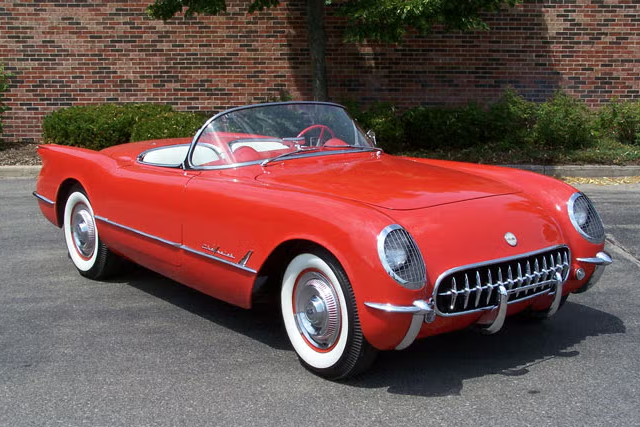
The cherry-red 1955 Chevrolet Corvette hummed to life, a low rumble that felt more like a heartbeat than an engine as it navigated the narrow, twisting ribbon of asphalt carving through the heart of the Appalachian Mountains. Sunlight filtered through the dense canopy of oak and pine, sending dappled shadows dancing across the glossy red hood as the car effortlessly handled the sharp hairpin turns, its suspension hugging the mountain road. As I shifted down, the roar of the pipes echoed off the sheer rock faces, momentarily drowning out the distant, soothing rush of a hidden waterfall plunging into a clear mountain stream below. The air was sharp with the scent of pine and damp earth, pulling me deeper into a valley where mist clung to the emerald peaks like a soft, white blanket. Rounding another bend, the trees parted to reveal a breathtaking panorama of blue-hued mountain ranges stretching into the horizon, a view that seemed to stop time, with the timeless classic perfectly in its element on the open road.
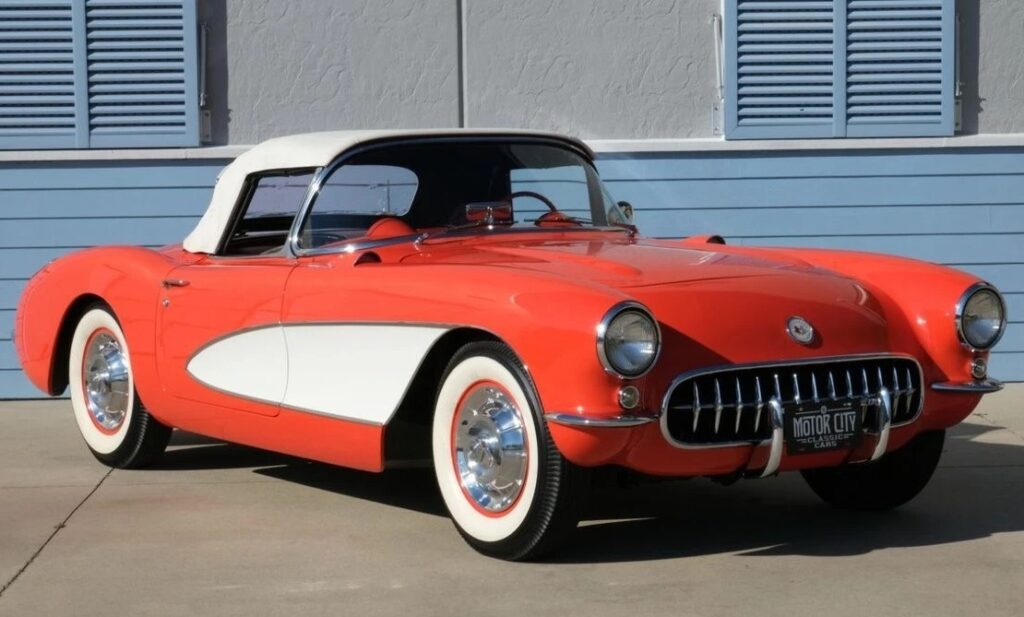
The late afternoon sun painted the Ozark ridge-line in shades of gold, but it was nothing compared to the fiery Venetian Red of the 1957 Chevrolet Corvette as it wound down the switchbacks. White coves lining the doors gleamed against the lush green of the early summer scenery, a stunning contrast to the asphalt. With the top down, the scent of pine and fresh-cut hay from the rolling farmland below flooded the cabin, blending with the intoxicating aroma of hot oil and aged leather. The dual-quad V8 rumbled a deep, thunderous tune that echoed off the limestone bluffs, a perfect accompaniment to the winding, mountainous road ahead. Every turn was a dance between driver and machine, the classic whitewalls gripping the pavement, turning a simple drive into a timeless journey through the heart of the mountains.
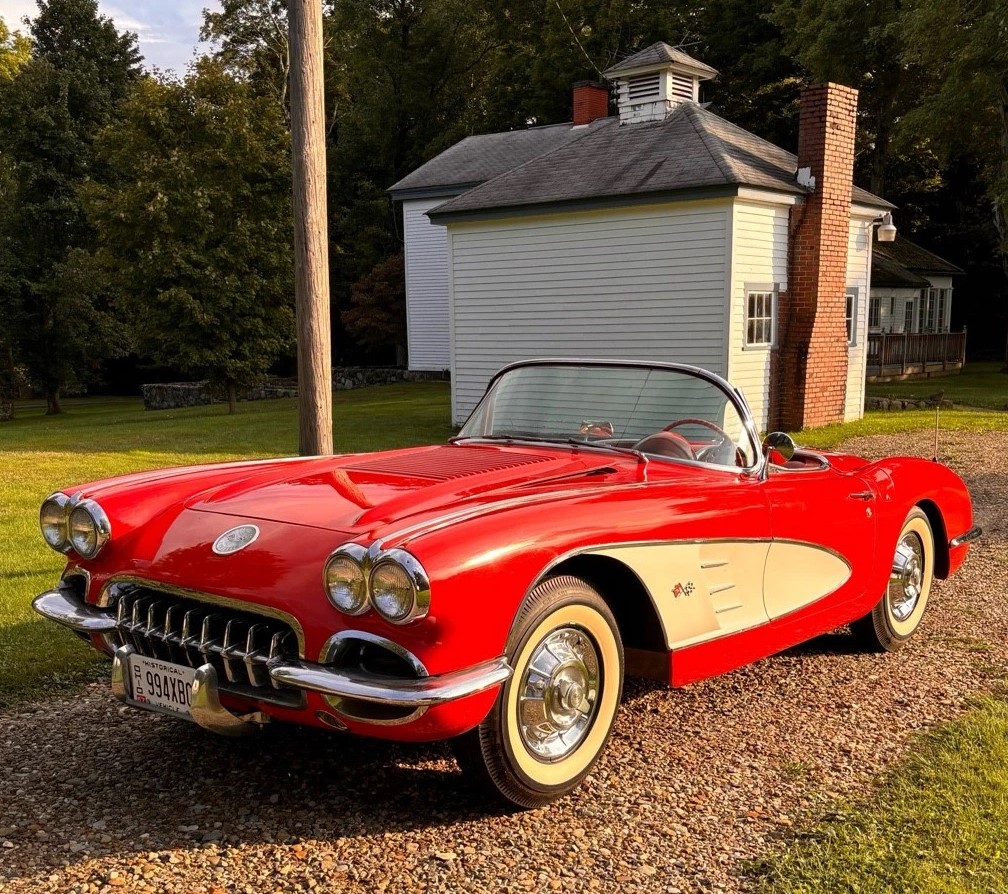
The ruby-red 1958 Chevrolet Corvette convertible, with its pristine white side-cove covers gleaming under the mountain sun, felt like a rocket cruising through a bygone era on the winding Rocky Mountain road. The top was down, allowing the crisp, pine-scented air to rush past as the roar of the V8 engine echoed off the towering, snow-capped granite peaks. To the right, a, glacial waterfall cascaded down a sheer cliff face, its mist cooling the air. A herd of majestic bison [buffalo] grazed peacefully in the lush, green field beside the road, their heavy, dark forms a stark contrast to the vivid color of the classic car, one large bull even pausing to watch the machine pass with a gaze as rugged as the landscape itself.
The journey required a careful hand, as the narrow, sun-dappled pavement navigated sharp, plunging turns that offered, at every moment, a, stunning, cinematic view of the endless, majestic, and untamed, mountainous surroundings.
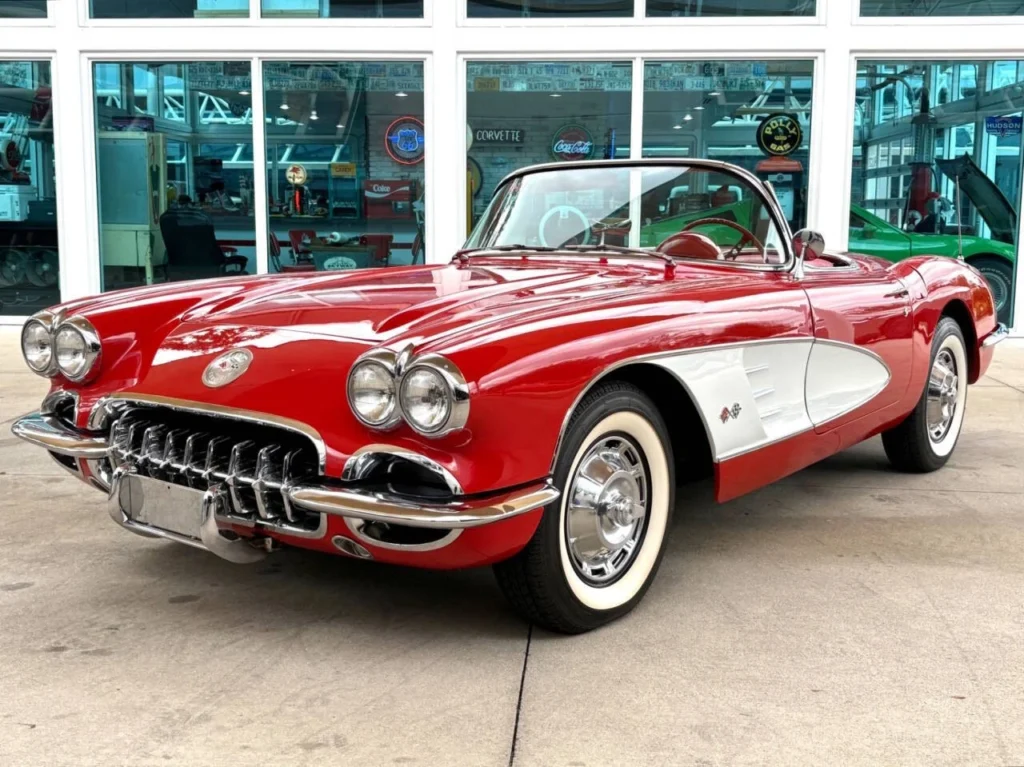
The ruby-red 1959 Chevrolet Corvette convertible, with its pristine white coves shining in the high-altitude sun, hugged the narrow, winding Colorado road with satisfying precision. As the driver downshifted into a sharp turn, the 4-speed manual transmission whined, and the scent of pine needles blended with the faint aroma of gasoline and old leather. The white soft-top was folded down, allowing the cool mountain air to whip past as the car passed close to a misty, rushing waterfall cascading down a sheer rock face. Below them, a vibrant, sweeping valley farmstead appeared, with cattle grazing in lush green pastures, a stark contrast to the craggy, gray peaks dominating the skyline. The fiberglass machine seemed to belong here, a perfect blend of American performance and scenic beauty, its red paint sparkling against the breathtaking Colorado landscape.
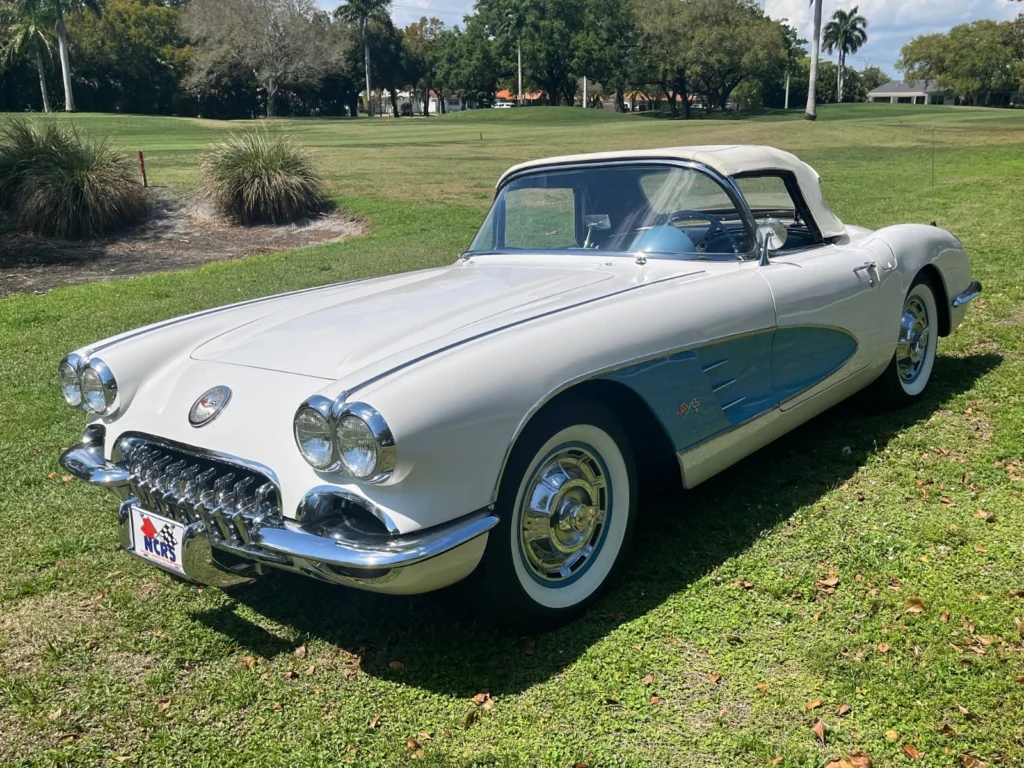
The desert air was a perfect 75 degrees as the 1960 Corvette convertible, its pristine Ermine White paint gleaming against the red rock, cruised past blooming saguaro cactus on old Route 66. The vibrant yellow of brittlebush and pink desert primrose painted the arid landscape, creating a stark contrast to the deep blue interior of the classic ‘Vette. With the top down, the scent of creosote bush after a light rain filled the air, and the hum of the small-block V-8 provided the perfect soundtrack, leaving the modern world far behind as the car moved toward the distant, hazy mountains
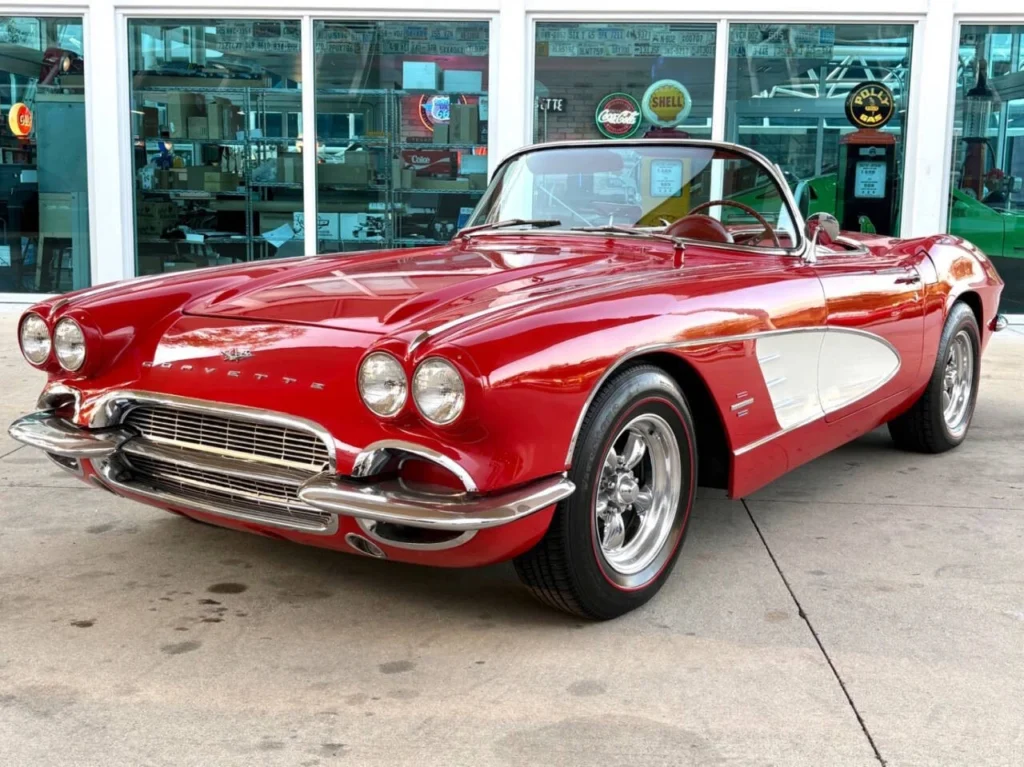
The 1961 Chevrolet Corvette, a vibrant, fuel-injected red with crisp white coves, purred like a living thing as it carved through the heart of Monument Valley, the V8 engine a muted rumble against the vast, profound silence of the desert. The top was down, allowing the warm, dry air to rush over us, carrying the intoxicating, delicate scent of desert wildflowers that exploded in yellow and purple blooms against the deep crimson sands. Around the winding, dusty asphalt—not unlike the scenic routes described in—towering red sandstone buttes and mesas stood as silent, fiery-orange sentinels under a limitless sapphire sky, their immense shadows providing fleeting relief from the afternoon sun. Patches of prickly pear cactus, dotted with bright pink blossoms, provided a colorful contrast to the rugged landscape, creating an otherworldly scene that felt like driving directly into a painting. With each passing mile, the contrast between the classic, polished red machinery and the raw, ancient, and untamed beauty of Utah’s backcountry felt both surreal and perfectly aligned, a timeless journey in a car built for moments exactly like this.
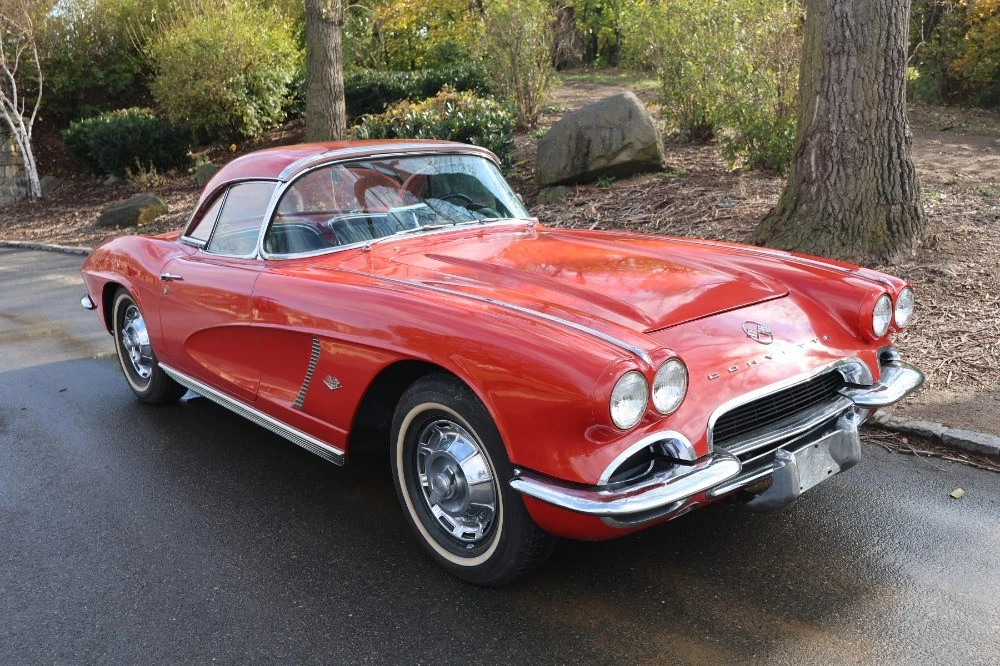
The scent of salt and blooming hibiscus filled the air, nearly masking the raw aroma of gasoline and hot fiberglass as I shifted the 1962 Corvette into high gear, the red paint practically glowing against the vibrant greens of the passing mangroves. With the top down on the Overseas Highway, the early summer sun felt intense, but the ocean breeze, coming off the turquoise water on both sides, kept the heat manageable. I eased the car past mile marker 10, the white sand beaches of Key West starting to peek through the palms, the turquoise ocean vistas stretching out endlessly, blending seamlessly with the horizon. The roar of the V8 engine was a perfect, rhythmic counterpoint to the soft crash of the waves against the shore. I let the car coast slowly, the iconic quad headlights catching the sunlight, truly capturing the essence of a sun-soaked Florida adventure.
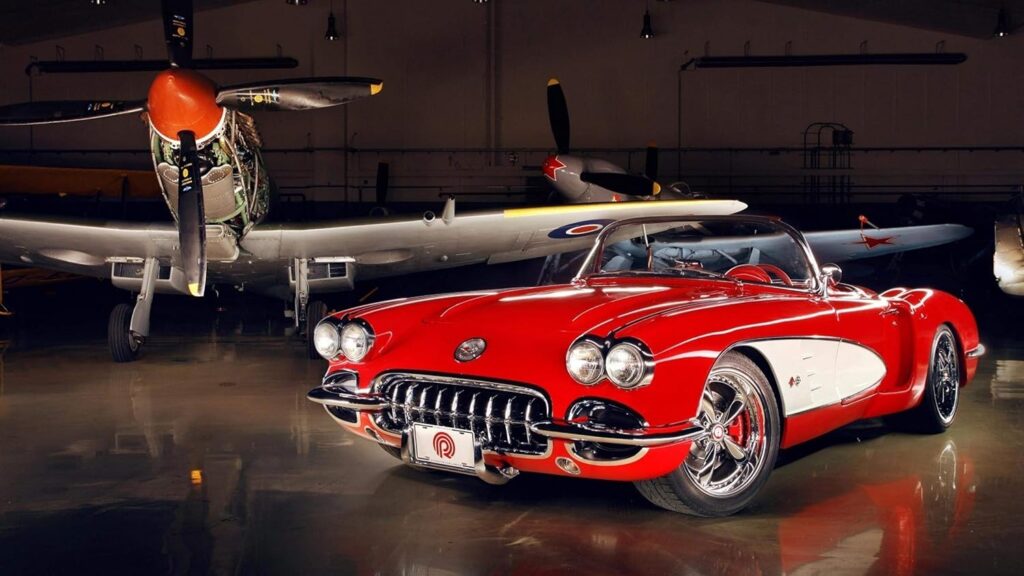
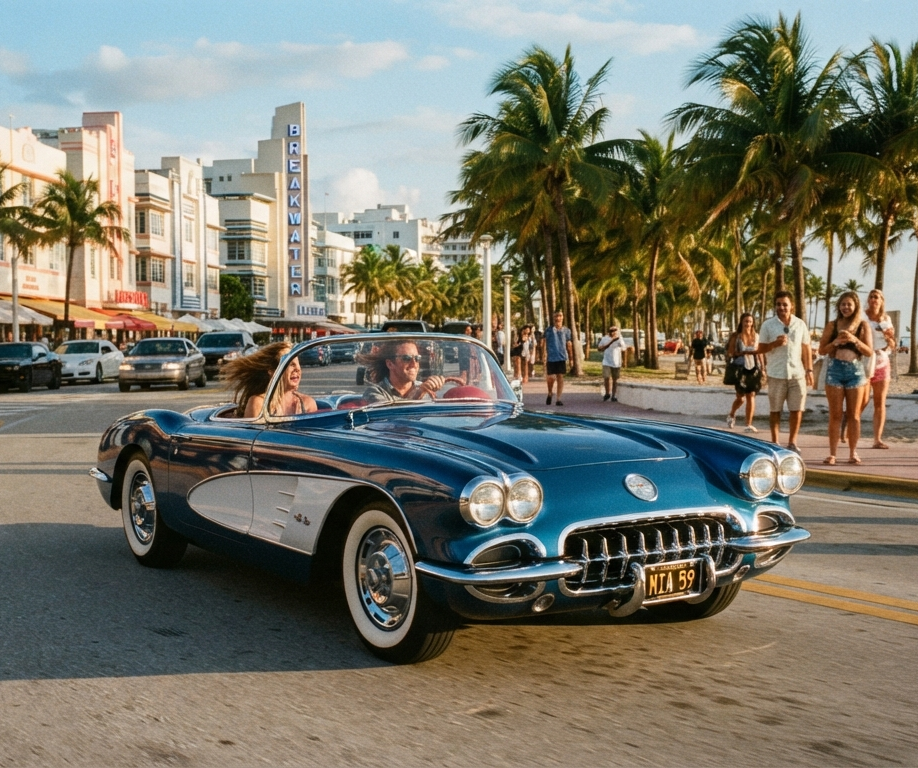
The tires hummed a steady rhythm against the sun-baked asphalt of Ocean Drive as the 1959 Chevrolet Corvette Roadster swept past the neon-lit facades of Miami Beach. Bathed in the golden glow of the late afternoon, the car’s deep blue paint shimmered, while the stark white coves carved a sharp, classic silhouette against the backdrop of swaying palm trees. A warm Atlantic breeze rushed over the low windshield, carrying the scent of salt water and Cuban coffee, ruffling hair as the V8 engine let out a low, confident rumble. Pedestrians turned their heads to watch the chrome grille teeth flash in the sunlight, capturing a perfect, timeless slice of Americana cruising through paradise.
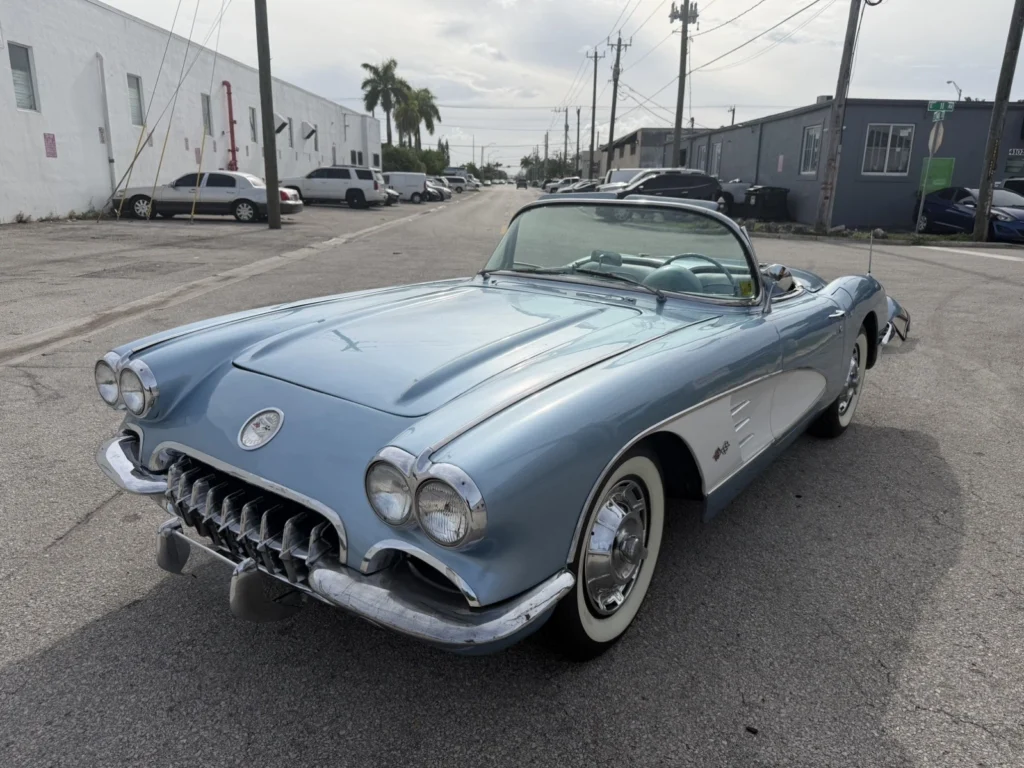
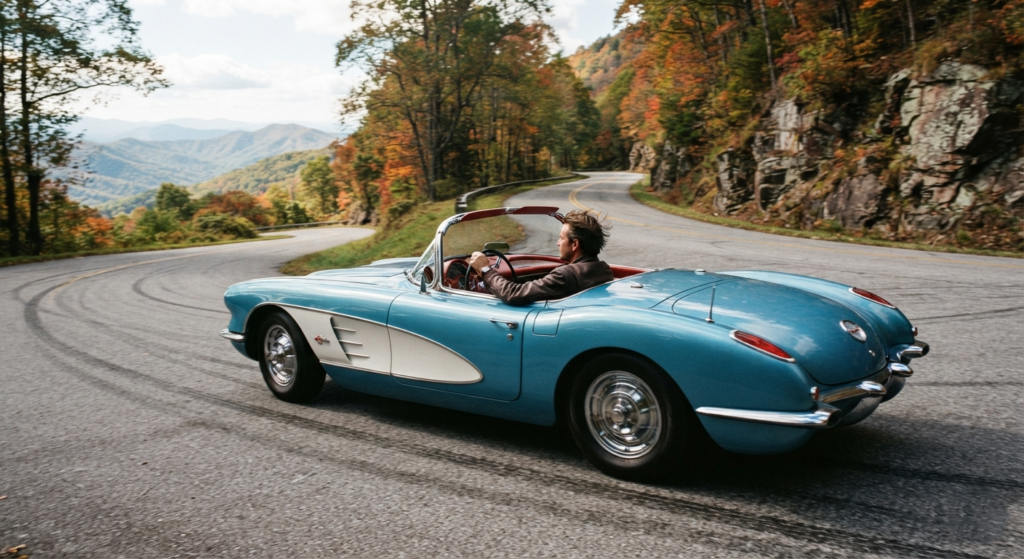
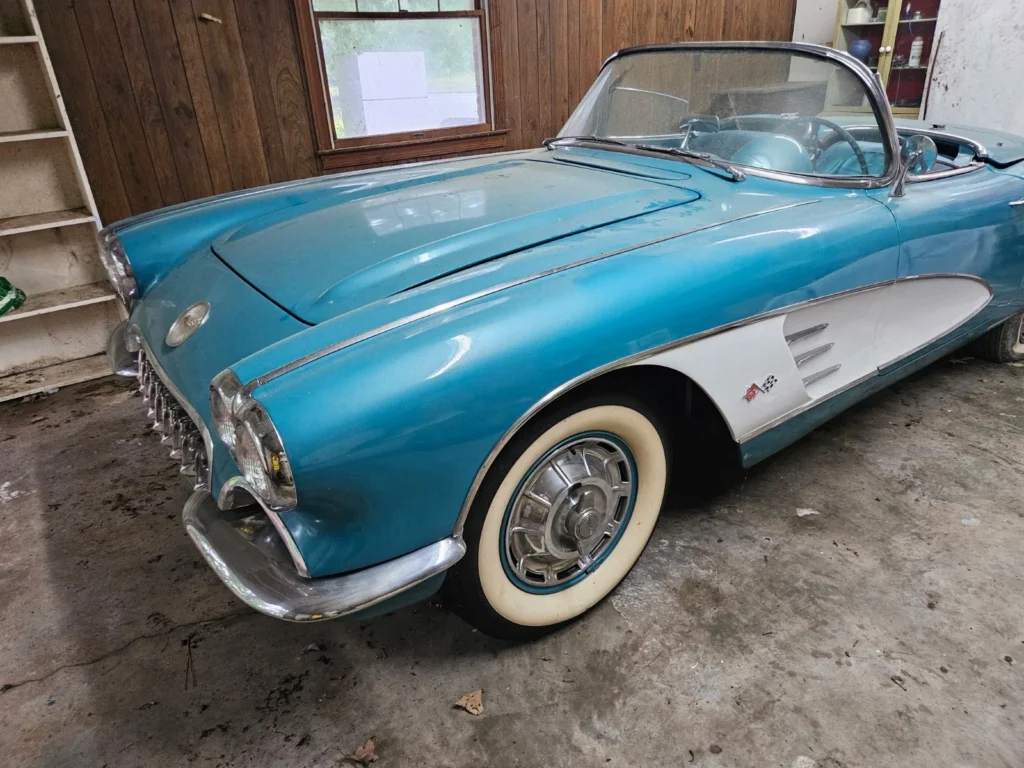
The cool autumn air rushed through the open cabin of the 1959 Chevrolet Corvette Roadster, its striking Frost Blue paint and contrasting white coves catching the dappled sunlight filtering through the Virginia canopy. Gripping the steering wheel, the driver shifted down into third as the mountain road began to twist sharply upward into the Blue Ridge Mountains. Beneath the elegant, classic hood, the transplanted later-model 350 small-block V8 roared with modern authority, its aggressive rumble echoing off the steep rock faces. Throwing the car into a sweeping hairpin turn, the driver confidently worked the tight, mechanical shifts of the Muncie four-speed transmission. The vintage tires clung tightly to the winding asphalt, perfectly blending timeless Americana styling with high-performance muscle against a backdrop of breathtaking rolling peaks.
C1 Corvette
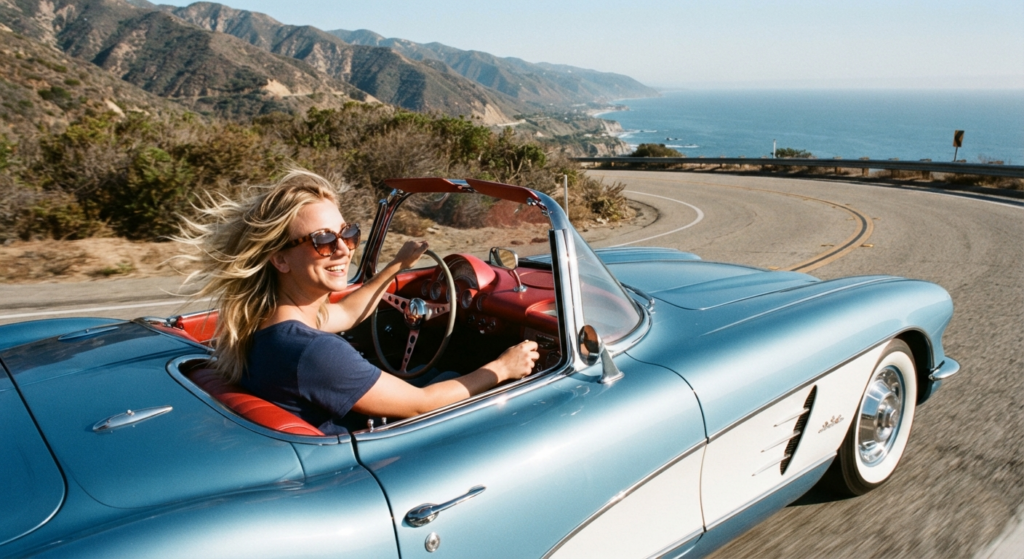
The California sun gleamed off the Frost Blue paint and striking white coves of the 1959 Chevrolet Corvette Roadster as Kaley Cuoco navigated the twisting mountain roads in the summer of 2018. Wearing oversized sunglasses, she smiled as the crisp Pacific air rushed through the open cockpit. Slipping the classic machine effortlessly through its gears with the mechanical precision of the Muncie four-speed, she felt the raw power of the upgraded, later-model 350 V8 engine roar to life, echoing beautifully against the canyon walls.
Kaley Cuoco in 1959 Chevrolet Corvette
 Version 1.0.0